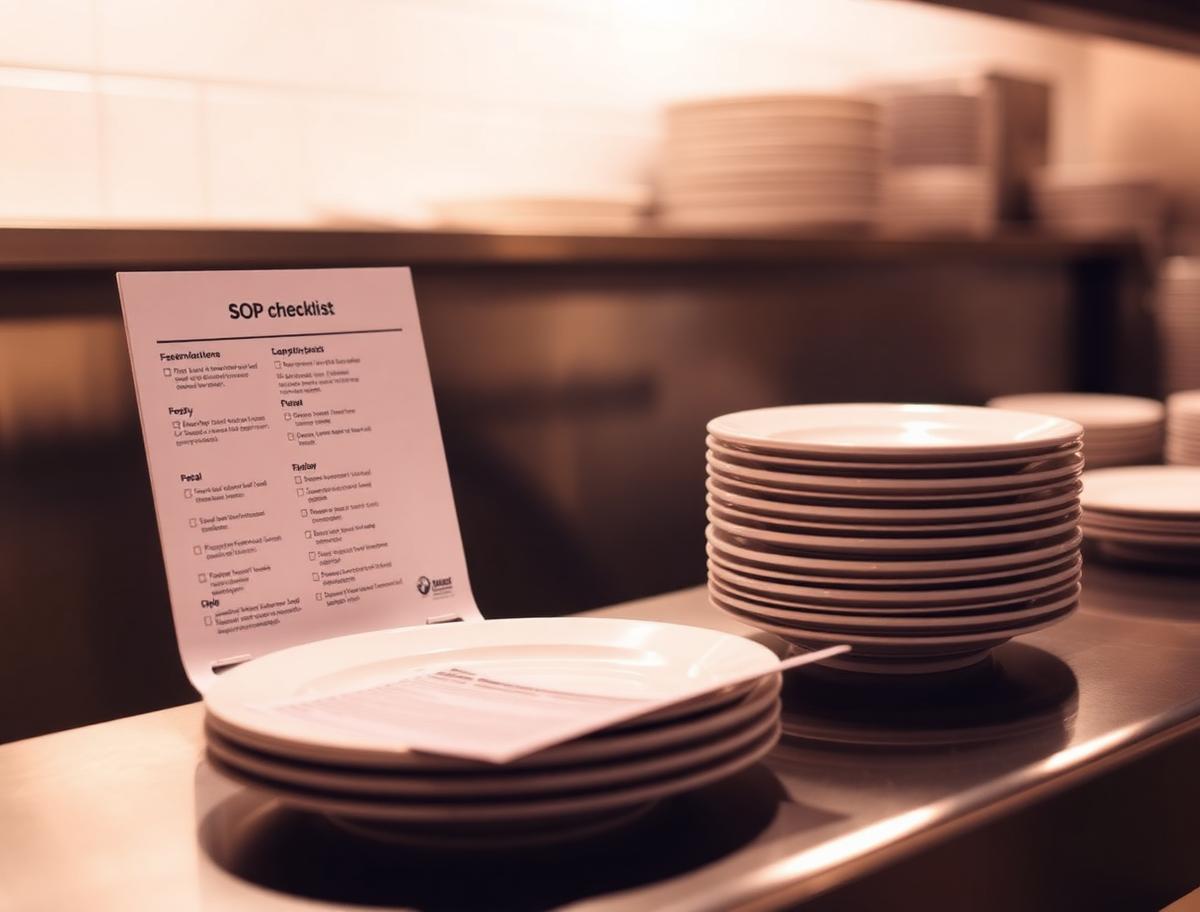
1. Purpose, Scope, and Responsibilities
- This SOP covers [[Specific Process]] to ensure food safety, quality, speed, and guest experience.
- Applies to all shifts and all team members assigned to the area.
- Manager on duty is responsible for training, compliance, and corrective action.
- Updates require manager approval and team communication.
- Related documents: food safety plan, recipe book, cleaning schedule.
2. Required Tools, PPE, and Setup
- Gather [[List Required Tools and Smallwares]] before starting.
- Wear appropriate PPE including gloves, apron, and hair restraint.
- Verify all equipment is clean, calibrated, and in working order.
- Set up station with mise en place for the shift.
- Confirm sanitizer solution is at correct strength.
3. Step-by-Step Procedure
- Receive and inspect incoming product using temperature and quality standards.
- Store items immediately in proper locations following FIFO.
- Prepare items according to recipe and portion standards.
- Cook or assemble to spec and verify temperature or appearance.
- Plate or package with correct garnish and presentation.
- Pass to service or hold at proper temperature.
- Clean as you go and maintain workspace throughout shift.
- Complete closing procedures including breakdown, cleaning, and restock.
4. Critical Control Points and Food Safety
- Monitor cold holding at forty-one degrees F or below.
- Hot holding at one hundred thirty-five degrees F or above.
- Cook to required internal temperatures per item.
- Cool and reheat following validated time-temperature standards.
- Wash hands at required moments and after contamination risks.
- Prevent cross-contamination through separation and sanitizing.
5. Quality Standards and Portion Control
- All dishes must match photo and recipe spec for appearance and taste.
- Use scales and portion tools for every item with a weight or volume spec.
- Reject or remake any item that does not meet visual or temperature standard.
- Track waste and comps daily with reason codes.
- Manager spot-checks during service.
6. Opening, Mid-Shift, and Closing Checklists
Opening Checklist
- Verify equipment on and at temperature.
- Stock all stations to par.
- Review reservations and prep list for the day.
- Confirm sanitizer and hand sinks ready.
- Brief team on specials and any changes.
Mid-Shift
- Replenish low items.
- Clean and re-sanitize surfaces.
- Check temps and logs.
- Communicate ticket times and any issues.
Closing
- Break down stations and store properly.
- Deep clean equipment and floors per schedule.
- Complete logs and waste sheet.
- Secure all areas and set alarms.
- Report any maintenance needs.
7. Corrective Actions and Escalation
- If temp is out of range, move product, recheck, and log.
- If quality issue, stop service of that item and notify manager.
- Guest complaint: apologize, offer remedy per policy, log details.
- Equipment failure: follow downtime procedure and notify manager.
- Safety hazard: stop work, secure area, report immediately.
8. Recordkeeping and Version Control
- Complete all logs at the required frequency.
- Retain records for [[Retention Period]].
- This SOP version supersedes previous versions.
- All team members sign training acknowledgment.
- Manager reviews logs weekly.
9. References
- Current food code and local health requirements.
- Brand recipe and presentation standards.
- Manufacturer equipment manuals.
- Company employee handbook.
10. Disclaimer
This is a professional sample template for restaurant SOPs. Customize to your specific equipment, recipes, and local regulations. Not a substitute for training or legal advice. Current as of 2026-06.
Additional Depth Content
Sample Temperature Log Table
| Time | Station | Item | Temp F | Action if out | Initials |
|------|---------|------|--------|---------------|----------|
| Open | Walk-in | Proteins | 38 | N/A | |
| 11am | Line | Hot hold | 142 | Stir/ recheck | |
Expanded Numbered Steps for Key Process
- Pre-shift: review pars and any eighty-six items.
- During: call back orders and confirm modifications.
- Post service: break down and sanitize per zone.
- Weekly: deep clean schedule and equipment inspection.
- Monthly: review SOP effectiveness with team and update as needed.
Further Depth
- Cross-train all positions for coverage.
- Use photos and short videos for training new hires.
- Celebrate zero waste or perfect ticket times.
- Tie SOP adherence to performance reviews.
- Keep this document printed and digital in the manager office.
This completes the SOP deliverable with depth and formatting compliance.