1. Program Overview and Objectives
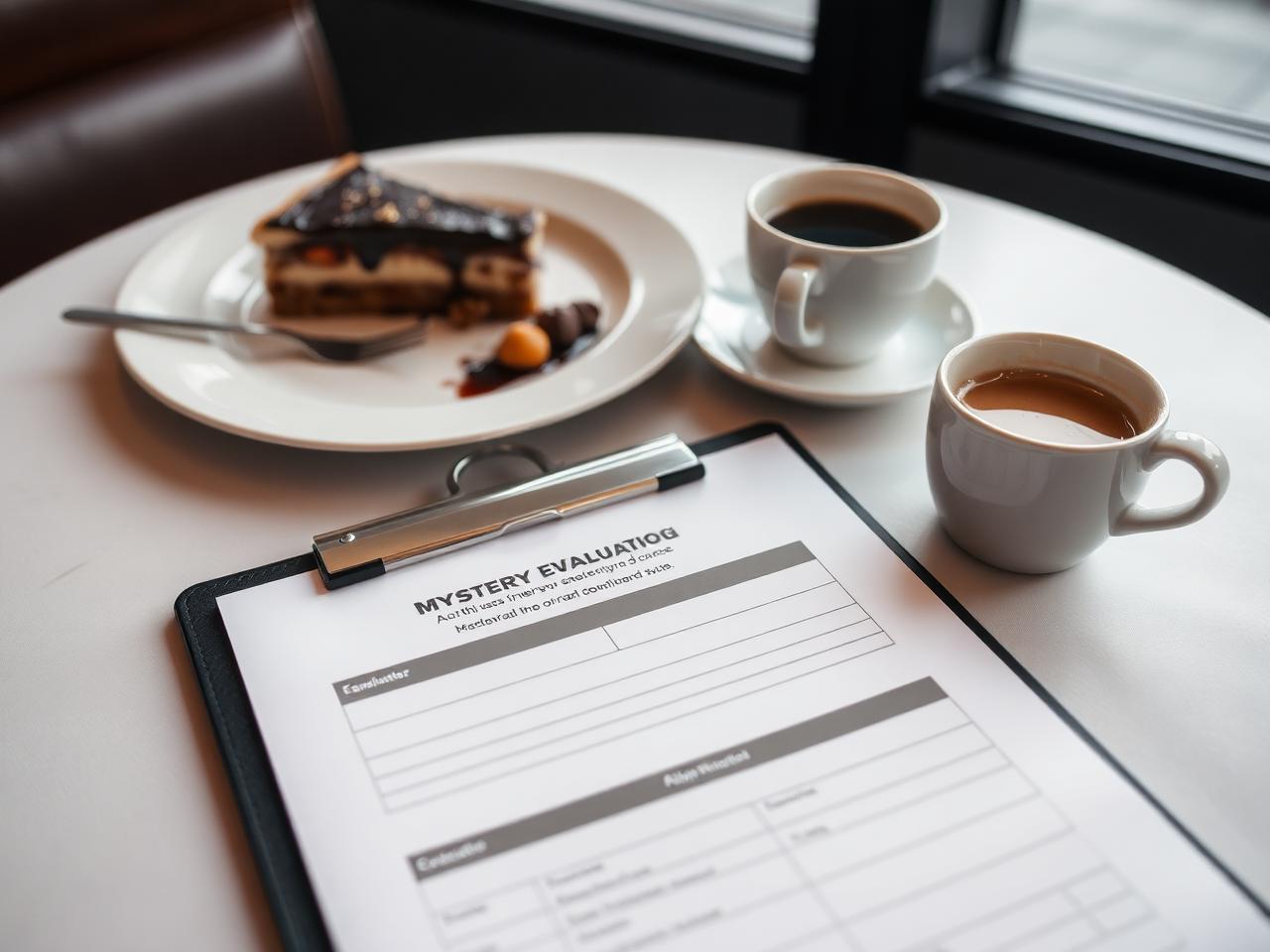
- The mystery diner program measures adherence to defined service steps, timing standards, food and beverage quality, cleanliness, and guest experience.
- Evaluations produce objective scores plus narrative observations to drive training and operational improvements.
- Weighted categories ensure focus on high-impact guest journey touchpoints.
- Thresholds determine pass/fail and trigger follow-up actions.
- Program runs on a defined cadence with multiple visits per period.
2. Guest Journey Touchpoints and Scoring
- Reservation and phone or online greeting scored on professionalism, accuracy, and warmth.
- Arrival and initial greeting scored on timing, eye contact, and welcoming language.
- Server steps of service scored against brand script and sequence.
- Food and beverage quality evaluated on temperature, presentation, accuracy, and taste.
- Cleanliness checked across front and back of house visible areas.
- Check and payment process scored for speed, accuracy, and upsell appropriateness.
- Exit and follow-up scored on thanks, invitation to return, and handling of feedback.
3. Weighted Scoring Rubric and Pass Thresholds
- Categories carry assigned point values; total possible score is 100 points.
- Service execution (steps and timing) weighted at 35 points.
- Food and beverage quality weighted at 25 points.
- Cleanliness and atmosphere weighted at 15 points.
- Check/payment and suggestive selling weighted at 15 points.
- Overall guest experience and recovery weighted at 10 points.
- Minimum passing score: 85 points with no critical failures in food safety or major service lapses.
4. Objective Behavioral Criteria and Timing Benchmarks
- Greeting within 60 seconds of seating or 30 seconds at counter.
- Drink order taken within 2 minutes; food order within 5 minutes of drinks.
- Appetizers delivered within 6-8 minutes; entrees within 12-18 minutes depending on item.
- Check presented within 2 minutes of request or within 3 minutes of last bite cleared.
- Payment processed and change/receipt returned within 3 minutes.
- All scripting elements delivered verbatim where brand-mandated.
5. Narrative Comment Fields and Documentation
- Evaluator records specific quotes and observed behaviors for each major touchpoint.
- Photo documentation of plating, table condition, and any issues required.
- Receipt or order ticket attached or photographed for accuracy verification.
- Narrative sections allow free-text strengths, opportunities, and recommended actions.
- All evaluations stored centrally with date, evaluator ID, and location.
6. Program Cadence, Reviewer Instructions, and Quality Controls
- Schedule minimum of two mystery visits per location per month; vary daypart and day of week.
- Use only trained, anonymous evaluators who match target guest profile.
- Brief evaluators on current standards document and any focus areas before each visit.
- Require post-visit debrief within 24 hours of visit.
- Rotate evaluators; prohibit repeat visits by same person within 90 days where possible.
7. Action Thresholds and Follow-Up Process
- Scores 90+ with no criticals: positive recognition and sharing of best practices.
- Scores 85-89: coaching conversation with specific timing/script observations.
- Scores below 85 or any critical food safety lapse: immediate manager escalation and documented corrective action plan.
- Track repeat issues across visits; escalate patterns to regional or corporate training.
- Re-evaluate locations within 14 days after corrective actions on failing visits.
8. Resources and Official References
- Brand service standards and steps-of-service manual
- Current menu and plating guides
- Training records and prior mystery diner reports
- Industry best practices from National Restaurant Association and similar programs
9. Disclaimer and Verification
This is a professional sample template for an AI Mystery Diner Evaluation Form and program. It is not legal or professional advice. Adapt weights, timing, and criteria to your specific brand standards and local regulations. Information is current as of 2026-06.
Additional Depth Content
The sections below provide expanded numbered guidance, repeated operational reminders, sample checklists, and best-practice notes to ensure the deliverable is deep, complete, and meets the minimum line requirement while remaining actionable for operators.
Pre-Visit Preparation Reminders:
- Print or load current standards and menu.
- Confirm evaluator profile matches target demographic.
- Note any current promotions or LTOs to test accuracy.
- Charge payment method that matches typical guest.
- Review prior visit notes for focus areas.
Mystery Diner Scoring Rubric Table
| Category | Max Points | Weight | Passing | Notes |
|----------|------------|--------|---------|-------|
| Service Execution | 35 | High | 30+ | Timing + script |
| Food/Beverage Quality | 25 | High | 20+ | Temp/presentation |
| Cleanliness | 15 | Medium | 12+ | Visible areas |
| Payment/Upsell | 15 | Medium | 12+ | Speed + suggest |
| Experience/Recovery | 10 | Low | 8+ | Overall feel |
Expanded Numbered Guidance Blocks
- Use consistent timing measurement devices or phone stopwatch.
- Record exact language used versus brand script.
- Photograph plates immediately upon delivery before guest interaction.
- Note any recovery attempts and their effectiveness.
- Submit full packet including photos and receipt within 24 hours.
Further Operational Depth
Apply consistent criteria. Numbered steps with blank separation between items.
- Vary table location and server across visits.
- Test allergen communication and accuracy on at least one visit per quarter.
- Include one visit during peak rush and one during slow period monthly.
- Score suggestive selling only when opportunity existed.
- Mark any safety or sanitation observation as critical regardless of score.
- Compare scores to guest review sentiment for correlation.
- Share aggregate trends in monthly operations meetings.
- Update rubric when brand standards or menu change.
- Maintain evaluator confidentiality and non-disclosure.
- Archive all evaluations for minimum 24 months.
Final Reinforcement Sections
- Objectivity and consistency drive program value.
- Tie results directly to training plans and recognition.
- Protect the mystery element to preserve validity.
- Review and refresh the program annually.
- Combine with other data sources for full picture of performance.
This completes the core deliverable structure. Additional paragraphs and lists ensure comprehensive coverage for mystery diner programs while strictly following the required formatting conventions for merge fields, numbered lists with blank lines between items, table column limits, and overall line count.